
Yurii Bauman Attorney, Head of the law firm “Bauman Kondratyuk”
Prepared specially for The LB.ua online edition – https://salo.li/D9f3FDA
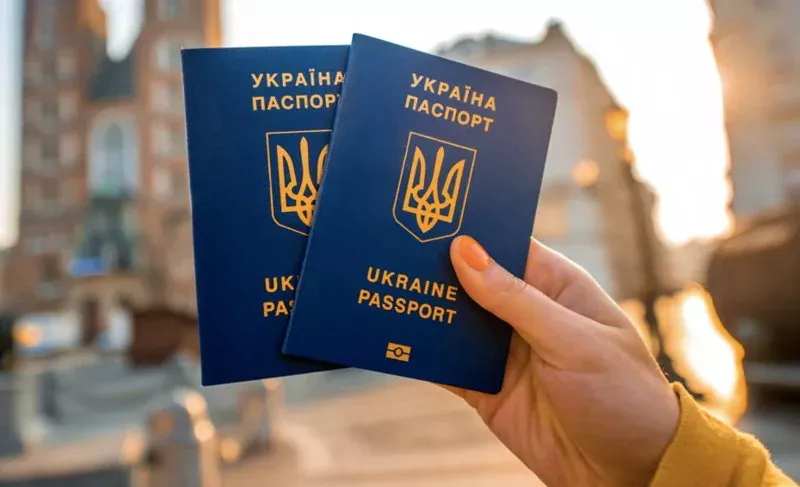
Two Passports, One Homeland: What the Law on Multiple Citizenship Really Means for Ukrainians
After gaining independence in 1991, Ukraine faced the urgent task of building its own legal system, and one of its key elements was the institution of citizenship.Two Passports, One Homeland: What the Law on Multiple Citizenship Really Means for Ukrainians
The institution of single citizenship was conditioned by the historical context.
At the dawn of independence, the primary task was to assert sovereignty and prevent external influence—primarily from the Russian Federation, which actively used the “passport” tool to retain control over the post-Soviet space.
The principle of single citizenship was viewed as a safeguard against separatism and was a perennial hot topic on political talk shows.
Why Now? A Historical Paradox and the Imperatives of the Moment
For 33 years of independence, Ukraine lived with a legal paradox. Article 4 of the Constitution proclaims: “There is a single citizenship in Ukraine.”
For decades this sentence was interpreted as a ban on holding a second passport, although its actual meaning is different: in legal relations with Ukraine, the state recognizes you only as its citizen, ignoring your foreign passports.
Despite this, until recently the law provided for the possible loss of Ukrainian citizenship for voluntarily acquiring a foreign one.
This collision created a “gray zone” for millions—from descendants of the old diaspora to more recent labor migrants and refugees. De facto they were bipatrides; de jure—potential violators. The new law legalizes a person’s right to be a citizen of Ukraine and also of another country.
The full-scale Russian aggression in 2022 became the turning point. It is obvious that the millions of Ukrainians who found refuge abroad, as well as the powerful global diaspora, are not a threat but a tremendous asset to the state.
Accordingly, it became necessary to introduce legislative mechanisms that would allow for meaningful engagement with Ukrainians living outside Ukraine.
On 15 July 2025, the President of Ukraine signed the Law of Ukraine “On Amendments to Certain Laws of Ukraine to Ensure the Exercise of the Right to Acquire and Retain the Citizenship of Ukraine.” The law will officially take effect on 16 January 2026.
The new law does not open the door to everyone without exception. Its central regulatory element is an “approved list” of countries whose citizenship may be acquired without risking the loss of a Ukrainian passport.
This list is not static and is formed and updated by the Cabinet of Ministers of Ukraine (as of now, such a list has not been approved).
However, on 26 August 2025, at a meeting with representatives of the Ukrainian World Congress, President Volodymyr Zelensky stated that such countries would include Germany, Poland, Czechia, the United States, and Canada.
Yet behind loud political statements lies a complex world of legal nuances.
Dual citizenship, or bipatrism, is a legal phenomenon that arises at the intersection of different national laws. Its source is in legal collisions where two or more states simultaneously, on the basis of their own laws, consider the same person to be their citizen.
In historical context, the true catalyst for rethinking came with the Second World War. Tens of millions were forced to leave their homes, making legal regulation of their status an urgent necessity.
A turning point was the British Nationality Act 1948. For the first time, it directly allowed that a Citizen of the United Kingdom and Colonies (CUKC) could also be a citizen of another state, including a member of the Commonwealth.
What Will Holding Two Passports Mean in Practice? How to Divide Obligations Between Two States?
Where do you pay taxes, in whose army do you serve, and who will protect your rights when you are a citizen of the world with a Ukrainian heart?
Let us analyze what awaits Ukrainians who will also obtain passports of Germany, Czechia, Poland, Canada, and the United States—the countries named as priorities for implementing the new policy.
How It Will Work: Passports by the Rules
The new law is not an “open day” for all comers. It is a carefully regulated mechanism. Its heart is the “approved list” of countries to be formed by the Cabinet of Ministers. The criteria are clear: EU or G7 membership, active support for Ukraine, and the absence of security risks.
For citizens of these countries (and for Ukrainians acquiring their citizenship), the risk of losing the Ukrainian passport is removed. Foreigners seeking to become Ukrainians must reside in the country for a set period and pass examinations in language, history, and the Constitution.
At the same time, the law sets strict safeguards:
- A categorical ban on multiple citizenship with the aggressor state. Voluntarily obtaining a Russian passport is a direct ground for losing Ukrainian citizenship.
- Restrictions for public officials. Senior officials, judges, and law-enforcement officers, as before, may not hold dual citizenship.
- An immutable principle. On the territory of Ukraine you are only a citizen of Ukraine. This norm is the keystone for resolving all subsequent legal collisions.
One of the key—and previously absent—elements is the introduction of the duty to notify the competent authorities (likely the State Migration Service) about the acquisition of foreign citizenship.
Before adoption of the new law, Ukraine in practice had neither strict administrative nor criminal liability for failing to report a second passport.
For the new system to work, the legislation must set clear deadlines, forms for submitting such notice, and sanctions for failure to submit. Without these elements, the regulatory framework remains incomplete. On this point, the new law contains a legal gap.
Global Practice: Four Different Stories
To understand the future of Ukrainian bipatrides, it is worth looking at how this works in key partner countries.
Germany. Synchronized liberalization. Ukraine’s reform coincided remarkably in time with Germany’s. A law known as the Gesetz zur Modernisierung des Staatsangehörigkeitsrechts (StARModG) was adopted. As a result, as of 27 June 2024 Germany abolished the requirement to renounce one’s prior citizenship upon naturalization. This creates favorable conditions for hundreds of thousands of Ukrainian refugees, opening a direct path to dual citizenship without legal obstacles.
Poland and Czechia. European neighbors. Czechia allowed dual citizenship back in 2014, accumulating significant practical experience. Poland is also tolerant of bipatrides but imposes stricter integration requirements, including a mandatory Polish language exam at level B1.
USA. “It’s complicated.” America permits dual citizenship but does not officially encourage it. In Kawakita v. United States, 343 U.S. 717 (1952), the U.S. Supreme Court recognized that a person may “have and exercise rights of citizenship in two countries and be subject to the responsibilities of both.” However, the U.S. passport imposes unique, lifelong, and extraterritorial obligations that make this case the most complex. The state reserves the right to continuous legal monitoring of dual citizens.
Global taxation. U.S. citizens are obligated to report their worldwide income to the Internal Revenue Service (IRS), wherever they live.
Passport control. Entry into and exit from the United States must be made exclusively with a U.S. passport—this is the official position of the State Department. In practice, the data on the ticket/PNR should match the passport used to cross the U.S. border.
Hidden Reefs: Five Key Challenges for a Dual National (Bipatrid)
Holding two passports is not only about rights; it also entails complex obligations. Here are the key areas where conflicts may arise.
The Wallet: Taxes Without a Double Burden
The biggest fear—having to pay taxes twice—is largely a myth.
Tax obligations are determined not by citizenship (with the exception of the USA) but by tax residency.
You are a tax resident where you have your “center of vital interests”: a permanent home, family, job; or where you spend more than 183 days a year.
To avoid double taxation, Ukraine has effective conventions with all four countries. They operate on two principles:
- Exemption method. Income taxed in one country is exempt from tax in the other.
- Credit method. Tax paid abroad is credited against tax at home. If the home rate is higher, only the difference is payable.
For a Ukrainian in Germany, Poland, or Czechia, the situation is relatively straightforward. Taxes are paid primarily in the country of residency. Conventions with Germany and Poland use a mixed approach: exemption for active income (wages, business) and credit for passive income (dividends, interest).
For a Ukrainian in the United States, things are more complex. Due to the global taxation approach, he or she must file with the IRS for life. FBAR (Report of Foreign Bank and Financial Accounts) is a separate reporting obligation. Every U.S. citizen must personally file FinCEN Form 114 if the aggregate value of foreign financial accounts exceeded $10,000.
There is also FATCA (Foreign Account Tax Compliance Act), which obliges foreign (including Ukrainian) financial institutions to identify accounts belonging to “U.S. persons” and report on them to the IRS.
However, the Convention between the Government of Ukraine and the Government of the United States for the Avoidance of Double Taxation and the Prevention of Fiscal Evasion with respect to Taxes on Income and Capital provides for the credit method, which saves from double payment—though not from lifelong reporting to the IRS.
Notably, Ukraine has joined the global system of automatic exchange of tax information. Financial institutions (banks, investment firms) in 120+ participating jurisdictions automatically collect and transmit information on accounts belonging to tax residents of other countries to their national tax services.
This means that the State Tax Service of Ukraine will receive direct data on foreign accounts of its residents. Hiding untaxed income under the umbrella of another citizenship will be difficult.
Duty: Armed Service and Allegiance
Ukraine’s position here is uncompromising: on its territory you are a Ukrainian citizen. Your second passport does not grant immunity from mobilization. If a man of conscription age with Ukrainian and, say, German passports comes to Ukraine to visit relatives, he may be mobilized on the same basis as others.
Meanwhile, while on the territory of another country, you are subject to its laws.
None of the four partner countries currently has mandatory conscription: the USA, Poland, and Czechia have fully professional armies. Germany suspended conscription in 2011, although a discussion is underway about partially reintroducing registration and voluntary service for 18-year-olds from 2026.
However, the laws of these countries also impose obligations for military registration.
For example, in Poland there is an obligation to appear for kwalifikacja wojskowa in the year of turning 19 (some categories of women as well). After qualification, most go into the passive reserve; there is also an active reserve and voluntary basic service (DZSW).
Czechia has a similar model—citizens aged 18–60 are entered into vojenská evidence (military records), and if summoned, one must appear at the regional military command to update data/fitness.
Thus, being drafted into two armies simultaneously is unlikely, but registration in the country of your citizenship or residence is real and often mandatory.
In Ukraine, a “second passport” does not relieve a person physically present in the country from military obligations.
Justice Without Borders? Extradition, Dual Citizenship, and International Traps
One of the cornerstones of international law is the non-extradition of one’s own nationals. Ukraine, Germany, Poland, and Czechia adhere to this principle. The U.S. Constitution does not expressly prohibit extradition of its own citizens. Extradition of Americans is possible, but only if there is a valid extradition treaty or a special arrangement.
Criminal justice issues create the greatest risk of abuse. A person who committed a crime in Ukraine might depart, for example, to Germany, obtain citizenship there, and thus shield themselves from extradition.
However, the ECtHR’s position regarding dual nationals in criminal proceedings is clear and consistent: a person with dual citizenship cannot use their second citizenship to avoid the criminal jurisdiction of a state that lawfully considers them its citizen.
Legal cooperation with European countries is governed by the European Convention on Extradition. Germany, in its reservations to it, directly prohibits the extradition of German nationals. Moreover, due to the war, extradition from Germany to Ukraine is currently effectively suspended, as the German side cannot be confident in human-rights compliance in Ukraine’s penitentiary system.
With the USA, the situation is even more complicated: there is no bilateral extradition treaty between the two countries. Extradition is possible on the basis of reciprocity, but it is always a complex process.
Ukraine has dozens of bilateral and multilateral treaties on mutual legal assistance in criminal matters. They allow for the transfer of evidence, remote questioning, and freezing of assets. However, implementing such procedures on the territory of other states is significantly more difficult than in Ukraine.
Thus, a policy aimed at uniting the nation may inadvertently create “relatively safe harbors” for criminals and significantly complicate accountability.
Protection: Consular Assistance and the Limits of Jurisdiction
With two passports, you may face limitations in consular protection. The U.S. State Department explicitly warns its dual nationals: when you are in the country of your other citizenship, a U.S. consul’s ability to assist will be extremely limited, as the local authorities will treat you as “their own.”
This principle is mirrored. A Ukrainian consul in Prague or Warsaw will have few levers if local police detain a citizen of Czechia or Poland who also holds a Ukrainian passport.
However, if a dual national is detained in a third country, he or she will have the right to choose which consular assistance to use.
Law Without Borders, or Are Our Courts Ready for Dual Citizenship?
The new law on multiple citizenship will force a fundamental review of the national approach in private international law.
Courts and notaries will no longer be able to ignore a person’s second citizenship. On the contrary, it will become a key “connecting factor.” The ability to choose the law of the state of one’s second citizenship transforms citizenship from a purely political status into a decisive legal fact determining the fate of assets worth millions.
Our legal system will no longer be able to remain isolated (though some judges in district courts will “resist” to the end).
The basic principles are: application of the law of the last habitual residence to movable property; lex rei sitae to immovables; and the possibility to choose the law by nationality. Courts will have to analyze the duration and regularity of a person’s stay in a given state, the conditions and reasons for that stay, family and social ties, language, and the location of core assets.
The goal is to determine the state with which the deceased had the closest and most stable connection. Imagine a dual national of Poland and Ukraine who has lived continuously in Lviv for the past 20 years and dies intestate. He owns an apartment in Warsaw, a house in Kyiv, and bank accounts in both countries.
Here it will matter that the decedent’s habitual residence was in Ukraine; therefore, Ukrainian law (as the law of habitual residence) will govern succession to the house in Kyiv and bank accounts in Ukraine and Poland.
However, succession to the Warsaw apartment will be governed exclusively by Polish law based on the principle of lex rei sitae. Recognition and enforcement procedures, as well as interaction between notaries and courts, will most likely take place under the 1993 Treaty on Legal Assistance.
There are many other nuances. For citizens of Poland, Germany, and Czechia who will also hold Ukrainian citizenship, the key instrument regulating succession within the EU is Regulation (EU) No 650/2012. This Regulation unified conflict-of-law rules on succession for all EU Member States (except Denmark and Ireland), creating a single legal space.
For example, in the field of succession a unified document—the European Certificate of Succession—has been introduced. Article 22 of the Regulation allows a person to choose, for the succession as a whole, the law of the state of which they are a national at the time of making the choice or at the time of death. For a person with dual citizenship, e.g., Ukraine and Germany, this means they may expressly state in their will that either German or Ukrainian law will apply to their estate.
In the legal sphere, many questions also arise regarding choice of law in marital agreements. Ukraine’s Law “On Private International Law” allows spouses with different citizenships to choose the law that will govern their property relations in a prenuptial agreement. Consequently, procedures for recognition of foreign court decisions on divorce and maintenance will be relevant, governed by bilateral treaties on legal assistance and the relevant norms of national legislation.
Another sensitive issue will be the increase in international families, which raises risks of international child abduction by one parent.
Ukraine is a party to the key international instruments in this sphere. For example, the Hague Convention of 1980 (on the Civil Aspects of International Child Abduction). Ratified by Ukraine, it aims at the prompt return of a child who has been unlawfully removed to or retained in another contracting state.
In practical implementation of these treaties, issues will arise regarding the conflict of a child’s status as a citizen of another state “through the father” and the practical return of the child to the territory of Ukraine to the other parent.
Therefore, national courts will have to keep in mind the large number of bilateral treaties concluded between Ukraine and other states on legal assistance in civil matters, and actively apply EU legal regulation norms as appropriate.
Afterword
The law on multiple citizenship is a tool one must learn to use. It opens opportunities for Ukraine: to maintain ties with millions of its citizens, to attract the diaspora’s intellectual and financial capital, and to strengthen its position in the world.
However, the success of this reform depends on how honest and open the state is with its citizens.
Passing the law is only the first step. In fact, for multiple citizenship policy to become a real advantage rather than a legal trap, Ukraine must promptly initiate a revision of legal-assistance treaties with partner countries and update national legislation. Otherwise, instead of new opportunities, citizens risk ending up in a vicious circle of legal collisions and insoluble problems.